

 CARPET
 AREA RUGS
 UPHOLSTERY
 PET ODORS
 TILE AND GROUT
 COMMERCIAL
Fine upholstery is an investment, and the wrong cleaner can ruin it in minutes. Velvet crushes, silk water-spots, linen shrinks and some dyes bleed. This guide explains how to read your furniture’s cleaning code, what each luxury fabric needs, how to care for upholstery between cleanings, and when to leave it to a professional.
Start With the Cleaning Code
Most upholstered furniture has a tag under the cushions or on the frame with a cleaning code. It tells you what the fabric can safely handle.
- W: water-based cleaners are safe.
- S: solvent-based cleaners only. Water can leave rings or shrink the fabric.
- W/S or SW: either water-based or solvent cleaners can be used.
- X: vacuum only. No liquid cleaners of any kind.
If the tag is missing, treat the piece as delicate and call a professional before using any liquid on it.
What Different Luxury Fabrics Need
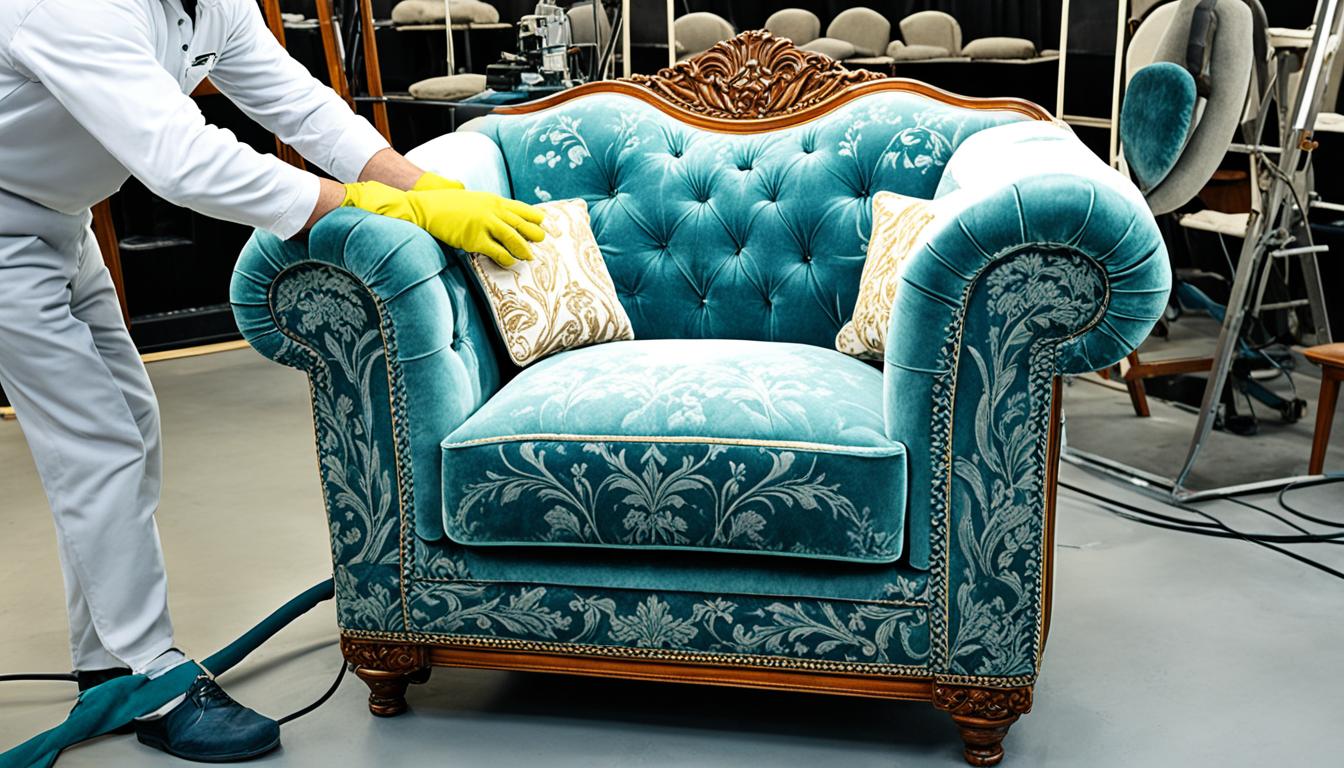
- Velvet: the pile crushes and marks easily. Vacuum with a soft brush attachment and brush the nap in one direction after cleaning.
- Silk: prone to water spots and color loss. Silk usually needs professional cleaning.
- Linen: strong but can shrink and wrinkle with too much water. Use minimal moisture.
- Wool: naturally stain resistant, but sensitive to heat and harsh chemicals.
- Chenille: soft, textured yarns can distort if scrubbed.
- Microfiber: durable and stain resistant, but check the code. Many microfiber pieces are S-coded.
- Leather: not a fabric, and it needs leather-specific cleaners and conditioner rather than upholstery shampoo.
Always Test Before You Clean
Before using any product, test it on a hidden area, such as the back of a skirt or under a cushion. Apply a little, wait, and blot with a white cloth. If color transfers to the cloth, the fabric changes texture, or a ring forms as it dries, stop and call a professional.
DIY vs. Professional Upholstery Cleaning
Home cleaning is fine for routine care: vacuuming, and blotting small fresh spills on W-coded fabric. It falls short in a few predictable ways:
- Over-wetting. Soaking the fabric can push the stain into the cushion and leave water rings, mildew or a musty smell.
- Residue. Upholstery shampoos that aren’t rinsed out leave a sticky film that attracts dirt.
- Wrong product for the fiber. Water on an S-coded fabric or a harsh cleaner on silk can cause damage that can’t be undone.
- Surface-only cleaning. Body oils, dust and allergens settle deep in the cushions, beyond the reach of a spray bottle.
A professional identifies the fabric, chooses the right method, and removes soil from deep in the cushions without over-wetting. Acme Clean offers upholstery cleaning in Denver for sofas, sectionals, chairs and other upholstered furniture. If you’re weighing a deep cleaning against a new sofa, see should you clean or replace your couch.
Caring for Upholstery Between Cleanings
- Vacuum regularly with an upholstery attachment, including under cushions and along seams.
- Rotate and flip cushions so they wear evenly.
- Keep furniture out of direct sun, which fades fabric over time.
- Blot spills immediately with a clean white cloth. Never rub.
- Manage pet hair with a rubber glove or lint roller, and use washable throws where pets like to sleep.
- Keep sharp objects and buckles away from delicate weaves.
Clean upholstery also helps your home’s air. Fabric holds dust, pollen and pet dander just like carpet. Learn how regular cleaning improves indoor air quality.
When to Call a Professional
- The fabric is coded S or X, or you can’t find the code
- The piece is silk, velvet or another delicate fabric
- A stain has set or you don’t know what it is
- Home cleaning left a ring or water mark
- The furniture smells of pets, smoke or mildew
- It’s been a long time since the piece was deep cleaned
Frequently Asked Questions
How often should upholstery be professionally cleaned?
It depends on use. Furniture used every day, or in a home with pets, children or allergies, benefits from more frequent cleaning than a formal living room sofa.
Can I steam clean my couch myself?
Only if the cleaning code allows water-based cleaning, and even then over-wetting is a common problem. For delicate or valuable pieces, professional cleaning is the safer choice.
What does an X cleaning code mean?
X means vacuum only. Any liquid cleaner, including water, can damage the fabric. Spots on X-coded fabric should be handled by a professional.
Will professional cleaning remove pet odors from furniture?
Professional cleaning removes the hair, dander and soil that hold odors. Urine that has soaked into the cushion may need additional treatment.
Book Upholstery Cleaning
Call 303-333-0154 or request an estimate.